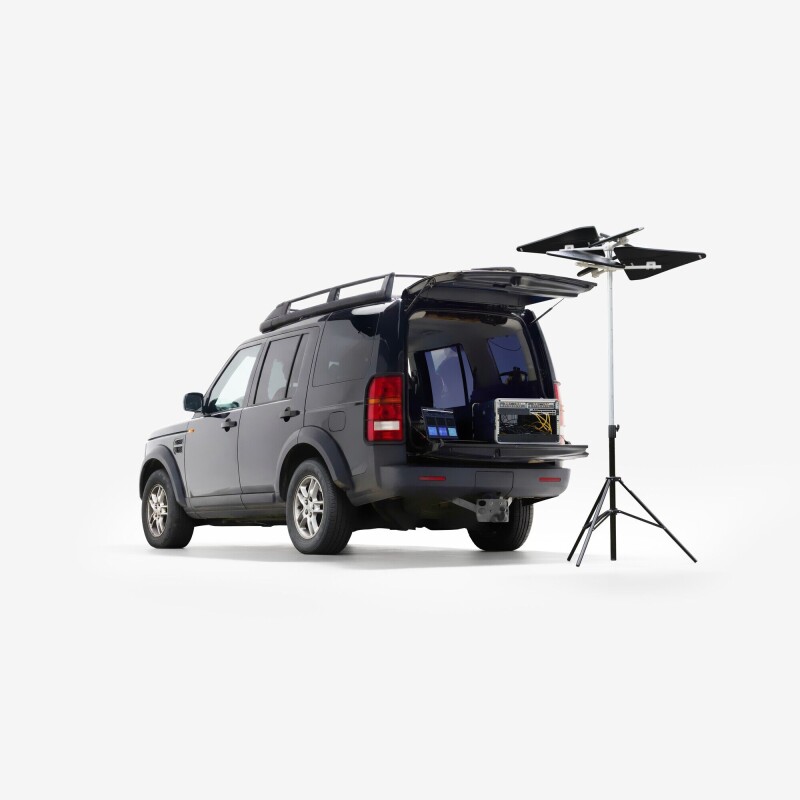
Passive 'ghost' radar can detect airborne threats without revealing its own position
BAE Systems is developing a passive radar system it claims could track airborne threats at a fraction of the cost of conventional radar, using existing broadcasts rather than transmitting signals that could reveal its position.
The defense biz says its covert radar technology detects reflections of television, radio, and mobile network transmissions from airborne objects. That lets it monitor airspace without broadcasting its own radar signal.
Conventional active radar transmits radio waves and measures their reflections to locate objects. But broadcasting like this is the equivalent of using a powerful searchlight to see in the dark, making the radar station itself highly visible to anyone monitoring the same radio frequencies.
Passive radar is not new, but BAE says its use of commercial off-the-shelf equipment brings the cost down to as little as a tenth that of comparable active systems. The equipment is compact enough to deploy from an SUV.
BAE says it can track targets ranging from small drones to …
You're reading a preview. The full article is published by The Register on their website.
Read the full story on The Register